
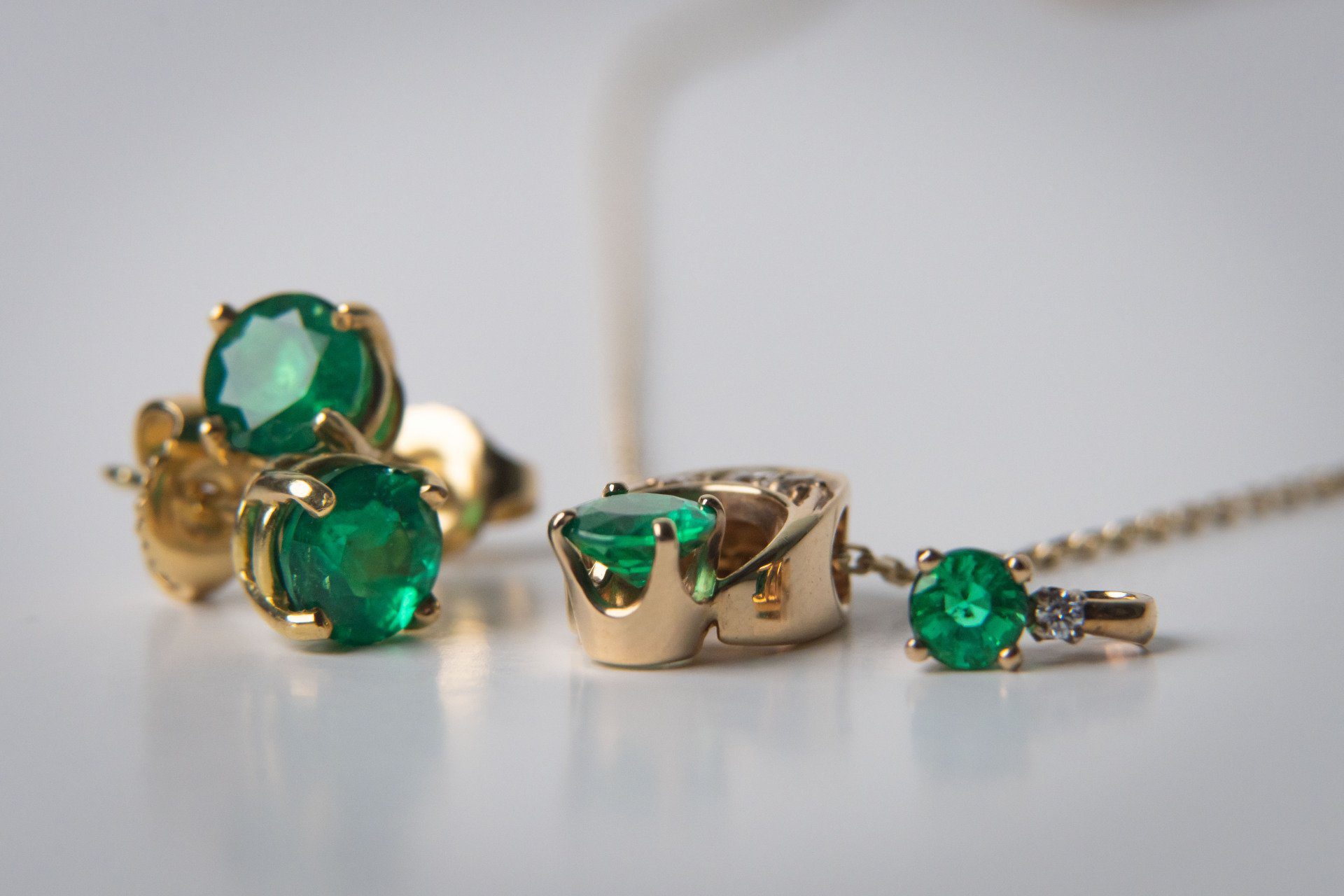
What’s in your jewelry box?
Just like a fine piece of furniture receives stain to highlight the woods natural beauty, gemstones also receive treatments to make them more marketable. Treatments make gems more available and affordable to consumers. We are proud members of the American Gem Society (AGS), American Gem Trade Association (AGTA), and the Jewelers Vigilance Committee (JVC). AGS helps our employees gain the knowledge to be able to talk about treatments with customers, AGTA provides guidelines for disclosure, while JVC helps with how the law pertains to disclosures. All three organizations hold their members to high standards of ethics and integrity.
The discussion of treatment specifics can get very complicated and in-depth, but to simplify for this newsletter we will break treatments down to eight major categories. The eight gem treatments are: dyeing, heat/pressure, surface diffusion, fracture filling, irradiation, bleaching/colorless impregnation, surface modification, and sugar/smoke treatment. Each of these treatments has the ability to 1.) deepen, change or remove color, 2.) improve clarity, 3.) create or accentuate phenomena and desirable inclusions, 4.) improve luster, and 5.) improve durability. Let’s go over each treatment so you can learn more about what may be in your jewelry box.
1. Dyeing: “a treatment that adds color or affects color by deepening it, making it more even, or changing it (GIA (2002), p. 34; Colored Stones book 6: Treatments).” It works on gems with porous surfaces like lapis lazuli, chalcedony, jadeite, coral, cultured pearls, and turquoise. If a gem has surface reaching fractures, these can include light-colored sapphires, rubies, colorless quartz, beryl, and so many others.
2. Heat: “exposing a gem to rising temperatures for the purpose of changing its appearance (GIA, et. al).” While not always predictable, the treatment is often permanent. Factors included are:
• Temperature control
• Rate of heating and cooling
• Duration of heating and cooling
• Atmosphere and pressure
• Chemical composition and properties of the gem
Gems commonly heat treated are sapphires, rubies, tanzanite, zircon, topaz, aquamarine, and amber. Tanzanite is a great example of a more marketable gem because without heating it, it is a brown color, but with it, it is a striking violet blue. 95% of sapphires have been heated to improve color and sometimes clarity.
3. Surface diffusion: “a treatment in which a gem is exposed to high temperatures and chemicals to allow color-causing elements to penetrate its surface (GIA, et. al).” Surface diffusion produces a thin layer of color at or just below the gems surface. The chemicals used depend on the gemstone’s elements that cause the color in the first place. For example blue sapphire would have titanium oxide and iron oxide added because those are the two elements that give sapphire the blue color. Common gemstones for surface diffusion are sapphire, ruby, and feldspar (examples: moonstone, sunstone, and labradorite).
4. Fracture filling: “using a filler to conceal fractures and improve the apparent clarity of a gem (GIA, et. al).” This method is used for the majority of emeralds, since they have fractures that inhibit the beauty and durability of the gem. Modern fillers include colorless oils, resins, polymers, and glass. Whatever filler is chosen, it must have a refractive index that is similar to the host gem for the light to pass through it properly. This treatment prevents most filled gems from routine cleaning and typical manufacturing processes since the filler can leak out if it gets too hot. Sometimes the filler is dyed to enhance the color of the gem. Besides emeralds, rubies are another gem that is fracture filled.
5. Irradiation: “exposing a gem to radiation to change or improve its color (GIA, et. al).” The type of radiation is either X-rays, gamma rays, or using subatomic particles like electrons or neutrons. This treatment creates a color center and isn’t very permanent since heat and light can remove the color. Common irradiated gems are topaz, light-colored tourmaline, golden beryl, green spodumene, freshwater pearls, and yellow-orange sapphire.
6. Bleaching and colorless impregnation: (bleaching) “a treatment that uses chemicals to lighten or remove color,” and (colorless impregnation) “filling of pores or other openings with melted wax, resin, polymer, or plastic to improve appearance and stability (GIA, et. al).” Many light-colored cultured pearls are bleached to remove black spots and produce uniform color. Other gems using either or both treatments are turquoise and jadeite. The impregnation technique often makes the gem more durable in addition to increased beauty.
7. Surface modification: “altering a gem’s appearance by applying backings, coatings, or coloring agents like paint (GIA, et. al).” Foil backed gems can increase brilliance, affect color, and even create phenomena. Painting the culet, girdle, or other small areas can make a light-colored gemstone appear like an entirely different gem. This type of treatment is meant to be deceptive if not disclosed by the seller. Typical gemstones that get surface modification are beryl, sapphire, ruby, quartz, jadeite, pearls, topaz, and even diamonds.
8. Sugar and Smoke: (Sugar) “soaking an opal in a hot sugar solution and then in sulfuric acid to darken it and bring out its play-of-color, and (Smoke) heating a wrapped opal until smoke or ash penetrates its surface to darken it and bring out its play-of-color (GIA, et. al).” Either technique requires the substance, whether sugar or paper, to burn down to carbon where it darkens the opal. Both are very shallow treatments which makes the new coloring likely to wear off as the stone is worn and abraded.
At Olufson Designs, we aim to relay as much knowledge as possible to our customers prior to the sale. We have a full gem lab on site which gives us the ability to test gemstones for many treatments. While some treatments are super common, like heating tanzanite and fracture filling emeralds, we strive to know as much about our gemstones as possible. We have strong relationships with our colored gemstone and diamond suppliers and require disclosures of treatments just as you expect from us. We are also aware of how to clean your jewelry so as to not disrupt any treatments that can be changed like fracture filling. That being said, it is very important to let your jeweler know about any treatments you know about when dropping jewelry off for cleaning or repair. In the end, please know that we have your back and our business ethic is strong so we can keep your trust.
What’s in Your Jewelry Box? A Guide to Gemstone Treatments
Just like a fine piece of furniture is stained to enhance its natural beauty, gemstones often undergo treatments to bring out their best features. These treatments make gems more vibrant, durable, and affordable for consumers. At Olufson Designs, we’re proud members of the American Gem Society (AGS), American Gem Trade Association (AGTA), and the Jewelers Vigilance Committee (JVC). These organizations uphold high standards of ethics and integrity, ensuring transparency and trust in the jewelry industry.
- AGS helps our team gain the expertise to discuss gemstone treatments with confidence.
- AGTA provides clear guidelines for treatment disclosure.
- JVC ensures we comply with legal requirements for transparency.
Together, these organizations help us provide you with the knowledge and trust you deserve when shopping for fine jewelry.
Why Are Gemstone Treatments Important?
Gemstone treatments enhance the beauty, durability, and marketability of natural stones. They can:
- Deepen, change, or remove color.
- Improve clarity.
- Accentuate unique phenomena or inclusions.
- Enhance luster.
- Increase durability.
While the specifics of treatments can get technical, we’ve simplified them into eight major categories. Let’s explore these treatments and what they mean for the gems in your jewelry box.
1. Dyeing
Dyeing adds or deepens color in porous gemstones like lapis lazuli, chalcedony, jadeite, coral, cultured pearls, and turquoise. It can also be used on gems with surface-reaching fractures, such as light-colored sapphires, rubies, and quartz. This treatment enhances color but requires careful disclosure to buyers.
2. Heat Treatment
Heat treatment involves exposing a gemstone to high temperatures to improve its appearance. This process is often permanent and can enhance both color and clarity. Factors like temperature, duration, and chemical composition play a role in the outcome.
Commonly heat-treated gems:
- Sapphires (95% are heat-treated for better color and clarity)
- Rubies
- Tanzanite (naturally brown, but heat transforms it into a stunning violet-blue)
- Topaz, zircon, aquamarine, and amber
3. Surface Diffusion
This treatment uses high heat and chemicals to infuse color-causing elements into a gemstone’s surface. The result is a thin layer of color just below the surface.
Commonly treated gems:
- Sapphires
- Rubies
- Feldspar (e.g., moonstone, sunstone, labradorite)
4. Fracture Filling
Fracture filling involves using oils, resins, or glass to fill cracks in gemstones, improving their clarity and durability. This is especially common for emeralds, which naturally have many fractures. However, filled gems require special care, as heat or cleaning can damage the filler.
Other treated gems:
- Rubies
5. Irradiation
Irradiation uses radiation (X-rays, gamma rays, or subatomic particles) to alter a gemstone’s color. While this treatment can create vibrant hues, the results may fade over time with exposure to heat or light.
Commonly irradiated gems:
- Topaz
- Tourmaline
- Golden beryl
- Freshwater pearls
- Yellow-orange sapphires
6. Bleaching & Colorless Impregnation
- Bleaching: Chemicals lighten or remove color, often used on light-colored cultured pearls to create a uniform appearance.
- Colorless impregnation: Filling pores with wax, resin, or plastic to enhance durability and beauty.
Commonly treated gems:
- Turquoise
- Jadeite
7. Surface Modification
This treatment alters a gem’s appearance by applying coatings, backings, or paint. While it can enhance brilliance or color, it’s often considered deceptive if not disclosed.
Commonly treated gems:
- Beryl, sapphire, ruby, quartz, jadeite, pearls, topaz, and even diamonds
8. Sugar & Smoke Treatments
These techniques are used on opal to darken its surface and enhance its play-of-color.
- Sugar treatment: Soaking opal in a sugar solution, then sulfuric acid.
- Smoke treatment: Heating opal wrapped in paper to create a darkened surface.
Both methods are shallow and can wear off over time.
Why Transparency Matters
At Olufson Designs, we believe in empowering our customers with knowledge. That’s why we:
- Maintain a full gem lab on-site to test for treatments.
- Build strong relationships with suppliers who disclose treatments.
- Educate our team to ensure you receive accurate information.
Some treatments, like heating tanzanite or fracture-filling emeralds, are industry standards. Others require extra care, like avoiding heat on fracture-filled gems. When you bring your jewelry to us for cleaning or repair, let us know about any treatments you’re aware of—we’ll handle your treasures with care.
Trust Is Our Foundation
Your trust is the cornerstone of our business. By adhering to the highest ethical standards, we ensure that every piece of jewelry you purchase is as beautiful and authentic as it appears. Whether you’re shopping for a new gem or caring for a cherished heirloom, we’ve got your back.
Ready to learn more about your jewelry? Visit us at Olufson Designs, where knowledge meets craftsmanship. Let’s uncover the stories behind your gemstones together.