
The Basics
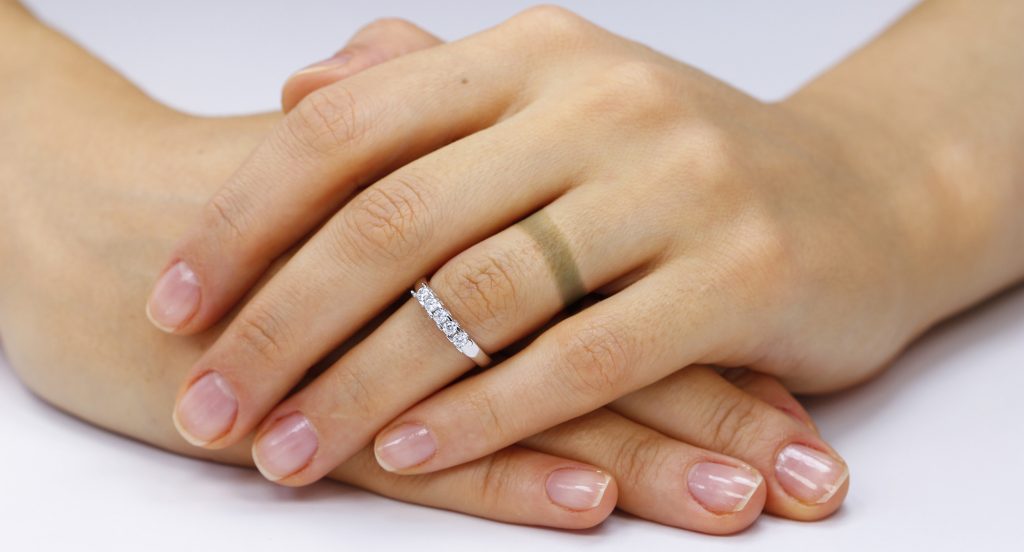
What is your ring made of? You are convinced you purchased a genuine gold ring, so why is it turning your finger black? Even authentically gold rings can do this to the best of us. Let’s start by understanding what rings are made of. Gold is measured using the term karat (kt), which is different than how diamonds are described using the term carat. Pure gold is 24 kt, yet jewelers don’t use pure gold because it is too soft. In order to make pure gold more workable and stronger, other metals are alloyed in. Metals such as zinc, nickel, silver and copper are added in to create an alloyed metal that will be workable and stronger for long-lasting wearability. If your ring is 18 kt gold, or 18/24 kt, that means that 75% is 24 kt yellow gold and the other 25% are other alloy metals. If you ring is 14 kt gold, or 14/24 kt, that means that 58% of the ring is 24 kt yellow gold and the other 42% are other alloy metals. If you have white gold, white metals are added in, if you have rose gold, copper dominates the other alloys.
White gold naturally is actually a very pale yellow, but for it to look that bright silvery-white, jewelers “dip” it in rhodium plating. Rhodium is part of the platinum family, thereby making it nearly hypoallergenic. For those with allergies, platinum, palladium or rhodium plated white gold is usually safe to wear. Plating does eventually wear off, so replating is a necessary evil to keep the allergies at bay.
Chemical changes
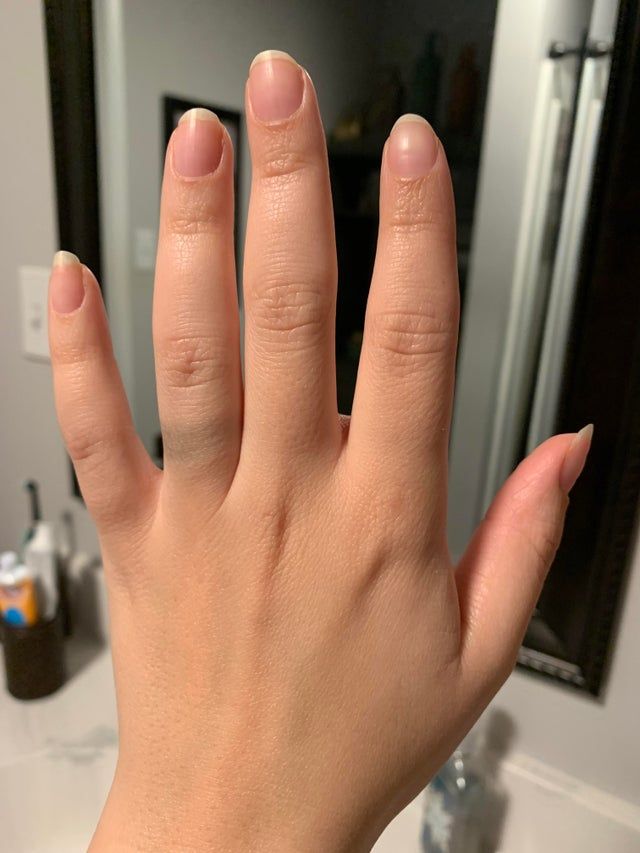
Household detergents can break down alloys in a piece of jewelry. These detergents contain chemicals such as chlorine bleach. The result is a black ring on your finger. Another culprit is makeup. Yes, who would have thought of makeup! The chemicals in makeup, lotions, and some soap rub against the metal and cause corrosion. When the metal starts to breakdown it comes off in fine dust-like particles that are dark in color, not the gold color you would think. Even swimming in a salt or chlorinated pool or hot tub on a regular basis will cause metals to break down quickly.
Environmental changes
Depending on where you live, salt and chlorine are in the air. Although oceanside living is attractive, it comes with salt and chlorine in the air, once again, breaking down metals.
Biological
Menopause
Menopause can cause hormonal and body chemistry changes. While the body adjusts to the new normal, jewelry is at risk.
Acidic or salty food and drink
Consuming food and drinks that are high in acid and salt will also cause your body to change its chemistry and corrode metals. Items to avoid are tomatoes, pickles, coffee, wine, oranges, pineapple, fruit juice, popcorn, salted chips, among many others.
Physical chemistry
Humid areas can leave your skin extra moist or hot areas where one sweats (salt) frequently can cause metals to corrode. Sweat is also acidic complicating the alloys integrity as well.
Prescription drugs
Some prescriptions like antidepressants, antibiotics, and even multivitamins can cause biological changes.
What to do?
- Wear rubber gloves or take off your rings when you are cleaning the house.
- Keep a food journal to make any correlations.
- Remove jewelry when you do anything strenuous, swim or workout.
- If your hands are frequently moist, invest in zinc oxide powder to keep them dry.
- Apply a jewelry lacquer or clear nail polish on the inside of the ring to keep the metal away from the corrosive elements.
- Make sure you don’t have a gold plated ring, as the plating wears off with time, it leaves the base metal to break down.
- Take off your jewelry when applying lotions, washing your hands, and showering.
- Take off your jewelry when sleeping.
Proper ways to clean your jewelry
Have Olufson Designs professionally clean your jewelry. You could stop in weekly and we’ll always take care of you. A nice side note is that the service is free! Alternatively use a mild soap, such as Dawn dish soap, with warm water. Sometimes an old soft bristle toothbrush is appropriate, but not always…it depends on the gemstone. We created a couple videos for you to learn how to properly clean most jewelry; you can find them in our blog section of the website from 2019. We are always available (Tuesday-Saturday) to answer your questions.